If you're new to tampons, all the different choices can feel a little confusing. Should you choose an applicator tampon or a non-applicator tampon? The good news is that both work in exactly the same way once inserted. The main difference is how they're put in. In this guide, we'll explain the difference between applicator and non-applicator tampons, so you can feel confident choosing the option that's right for you.
If you've been looking at tampons in the shops, you may have noticed there are two different types: applicator tampons and non-applicator tampons.
And if you're wondering which one you're supposed to use, don't worry, you're not alone! It's one of the most common questions people ask when they're thinking about trying tampons for the first time.
The good news? Once inserted, they both work in exactly the same way. The main difference is simply how the tampon gets into position.

A non-applicator tampon, also known as a digital tampon, is a tampon that is inserted using a clean finger. Don't let the name confuse you though. It has nothing to do with technology. "Digital" simply means using your finger to put the tampon in place.
And because they don't have an applicator, non-applicator tampons are often smaller and more compact, making them easy to pop into a pocket, school bag or pencil case when you're on the go. They also use less packaging than applicator tampons.
Once the tampon is in place, it works exactly the same way as an applicator tampon and lots of girls like the simplicity and smaller size of non-applicator tampons.

If you've chosen a non-applicator tampon, don't worry. Although it can seem a little intimidating at first, many girls find it's easier than they expected once they know what to do.
Once the tampon is in place, your finger can be removed and the string should remain outside your body. If the tampon has been inserted correctly, you shouldn't be able to feel it.
How To Put In A Tampon
An applicator tampon comes with a cardboard or plastic tube that surrounds the tampon. The applicator is used to help place the tampon inside the vagina, and once the tampon has been inserted, the applicator is removed and thrown away.
Just like a non-applicator tampon, the tampon itself stays inside the body to absorb menstrual flow, while the string remains outside the body for easy removal later.
Some people prefer applicator tampons because they like the extra assistance provided during insertion, while others prefer the simplicity of a non-applicator tampon.
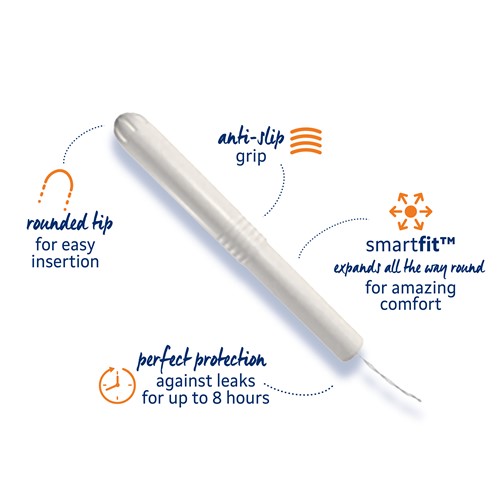
If you've chosen an applicator tampon, the applicator is used to help place the tampon into position before being removed and thrown away.
Whether you're considering an applicator tampon or a non-applicator tampon, it's important to remember that neither option is better than the other. Once inserted, they work in exactly the same way. The only difference is how they're put in place.
Some girls prefer using an applicator, while others like the simplicity and compact size of a non-applicator tampon. Many people find they know what they prefer straight away, while others try both before making up their mind.
Whichever option you choose, take your time and don't put pressure on yourself. Like any new skill, using a tampon can take a little practice, and that's completely normal.
The simple answer is that both applicator and non-applicator tampons are great options for teenagers and anyone new to tampons. It really comes down to how you feel about inserting a tampon.
Many girls are perfectly happy using a non-applicator tampon and feel confident inserting it with their fingers. Others prefer a little more guidance and find that an applicator tampon helps them position the tampon more easily.
There isn't a right or wrong choice when it comes to applicator and non-applicator tampons.
Both work in exactly the same way once inserted, so the best option is simply the one that makes you feel most comfortable and confident.
Some girls prefer the compact size of a non-applicator tampon, while others like the extra guidance an applicator provides.
And don't worry if you try one type and then decide to switch. Finding the right period products is all part of getting to know your body and discovering what works best for you.

Whether you're new to tampons or just curious, we're here to clear up the confusion with facts, not fear, so you can feel confident and in control.
Swimming on your period might feel awkward, but it’s totally doable. We're here to share some simple tips for staying protected in the water, why tampons can help, and what to do if you’re not ready to use one yet.
If you’re thinking about using tampons for the first time, you’re not alone! And as you grow more confident with your cycle, you might start wondering: When is the right time to use a tampon?
There isn't a right or wrong choice. Some girls prefer applicator tampons because the applicator helps guide the tampon into place, while others are happy to use a non-applicator tampon from the start. Both work exactly the same once inserted, so it's all about what feels most comfortable for you.
Yes. Being a virgin does not stop you from using tampons. Tampons sit inside the vagina to absorb menstrual flow and can be used whether you've had sex or not.
No. A tampon cannot get lost inside your body. The vagina is a closed space, so the tampon has nowhere else to go. If you're having trouble removing it, try to relax and gently pull on the string.
If a tampon has been inserted correctly, you shouldn't be able to feel it. You may be aware that it's there, but it shouldn't feel uncomfortable. If it does, the tampon may need to be inserted a little further.
Tampons should be changed regularly according to the instructions on the pack. Choosing the correct absorbency for your flow can help you stay comfortable throughout the day.
No. Applicator and non-applicator tampons are equally effective at absorbing period flow. The only difference is how they are inserted. The best tampon is the one that makes you feel confident and comfortable.
Yes. Tampons are safe for teenagers when used according to the instructions provided. Many girls choose to use tampons as soon as they start their periods, while others prefer to begin with pads and switch later. Both options are perfectly normal.
