Inserting a tampon can feel a bit daunting at first, but with the right tips, it gets much easier. Whether you're new to tampons, curious about how they work, or just need a little extra guidance, we've got you covered. From finding the right angle to making sure it feels comfortable, our top tips will help you feel confident and in control.
Learning how to insert a tampon is easy once you’ve got the hang of it. Whether your new to tampons or you’re simply looking for some useful advice, we’ve got plenty of tips to help you feel at ease. Our aim is to make you feel comfortable and confident, no matter which tampons you use.

Make sure your hands are clean before unwrapping the tampon. Using a gentle soap and warm water is the best option.
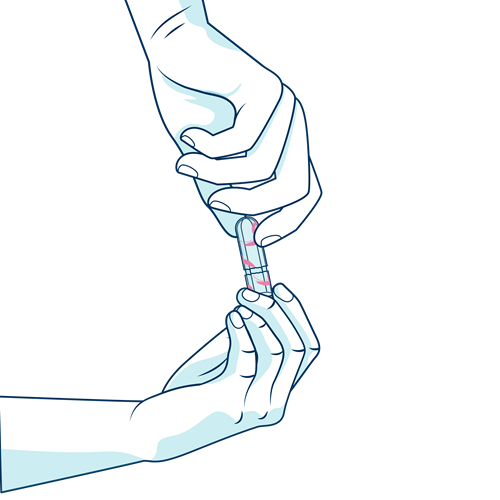
Simply twist the wrapper to remove the bottom section, unravel the string and give it a gentle tug to make sure it’s secure. Then take off the top part of the wrapper, and you’re ready to insert the tampon.
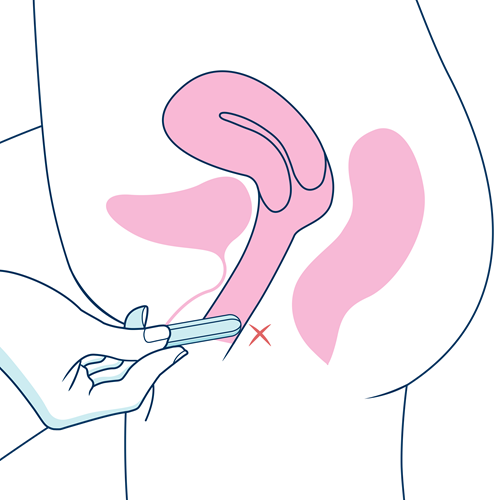
There are many positions you can get into when inserting a tampon. We find the best positions are squatting / sitting down on the toilet seat with your knees apart, lifting a leg or lying down with your legs apart.
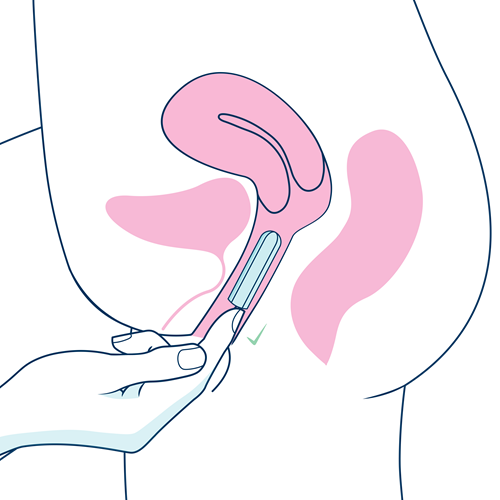
Use your fingertips to guide the tampon into position. Gently push until your knuckle touches the entrance to the vagina. If you’re new to using tampons, you might start to tense up. Relax and take a deep breath — you’ve got this!
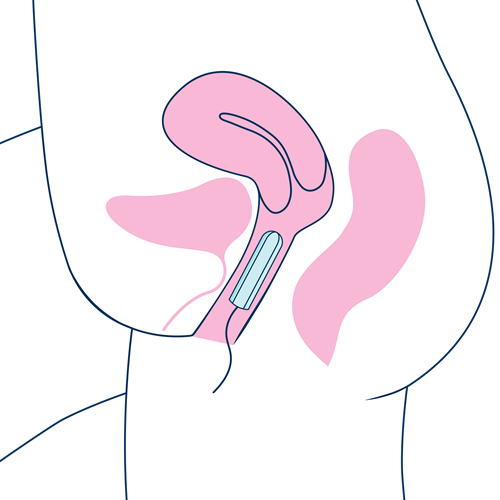
You'll know the tampon is in the right spot when you can no longer feel it. At first, it may feel like it's too far up, but actually, this is the perfect position for ultimate comfort. The tampon string should be hanging outside of the vagina.
It’s important to make sure your hands are clean before unwrapping and using a tampon.

Make sure you unravel the tampon string after removing the tampon wrapper.
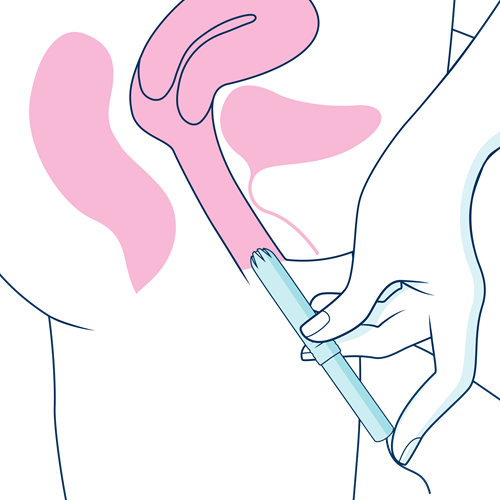
Hold the applicator with your thumb and middle finger at the base of the tube. There will most likely be some grooves to help you get a good grip.
Slowly insert the tampon applicator all the way into the vagina in a slanting direction towards the lower back, and until your fingers touch the entrance to the vagina. Using your index finger, or even your other hand, push the inner tube / plunger all the way in.
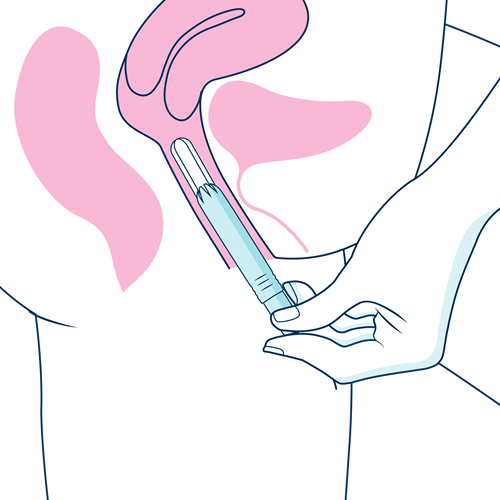
After removing the applicator, the tampon should be positioned inside the vagina with the string hanging out.
Here are some extra techniques and tips for people learning how to properly use a tampon for the first time:
The good news is that removing a tampon is easy to figure out once you know how to put one in. Firstly, make sure you wash your hands and get into a comfortable position.
When you’re ready to remove your tampon, you can locate the tampon string and pinch it with your thumb and index finger before slowly pulling it out. From there, wrap the tampon in a bit of toilet paper, throw it in the bin and wash your hands again. It really is that easy! We never recommend flushing your tampon.
Always read the leaflet held inside every pack of tampons and change your tampon every 4-8 hours to avoid leaks and reduce the risk of Toxic Shock Syndrome (TSS).
Inserting and removing a tampon takes practice. Some of us grasp it on our first try, while others need a bit more time. Take your time and try a couple of absorbencies to find the best match. And if you simply can’t wrap your head around inserting a tampon with your finger, you could try using a pad, applicator tampons or menstrual cups. Period underwear is also a great alternative for many women out there.
Lil-Lets non-applicator and applicator tampons are made with SmartFit™ technology that expands all the way around for greater comfort and protection against leaks. They’re also made from *96% less plastic than most leading tampon brands while being 100% free from chlorine and bleach. Choose from a wide range of absorbent and comfortable tampons to suit your flow.
*94- 96% less plastic when comparing equivalent absorbency tampons from the Lil-Lets non-applicator range to the leading brand compact plastic applicator ranges.
Whether you're new to tampons or just curious, we're here to clear up the confusion with facts, not fear, so you can feel confident and in control.
Swimming on your period might feel awkward, but it’s totally doable. We're here to share some simple tips for staying protected in the water, why tampons can help, and what to do if you’re not ready to use one yet.
Swimming On Your PeriodUsing tampons gets easier with a little know-how. Here are some simple do’s and don’ts to help you feel confident and stay safe.
Tampons do's and don'ts
The easiest way to insert a tampon is whatever feels most comfortable for you!
Many people find it easiest to either sit on the toilet or stand with knees slightly bent. Gently guide the tampon in using your finger, aiming slightly towards the lower back rather than straight up.
The most important thing is to take your time, stay relaxed, and not rush. It might feel a bit unfamiliar at first, but once it’s in the right place, you shouldn’t be able to feel it at all.
No! You can choose whatever feels most comfortable for you. Some tampons come with applicators to help guide them in, while others (non-applicator tampons) are inserted using your finger. Both work equally well, so it’s just about personal preference and what feels easiest for you.
Yes, you can, if you wish! As long as you feel ready and comfortable, there’s no rule about when you can start using tampons. Some people prefer to wait a little while and until they get used to their flow and cycle, while others try them straight away - both are completely fine.
It’s best to aim the tampon slightly towards your lower back, rather than straight up. This follows the natural angle of your body and can make insertion feel much more comfortable and easier.
Inserting a tampon only takes a few seconds once you’re used to it. If it’s your first time, it might take a little longer while you figure out what feels comfortable and that’s completely normal.
There’s no need to rush. Take your time, relax, and go at your own pace. The more familiar it becomes, the quicker and easier it will feel.
No - putting a tampon in shouldn’t hurt. It might feel a little unfamiliar or slightly uncomfortable at first, especially if you’re new to it, but it shouldn’t be painful.
If it does hurt, it’s often because the tampon isn’t in quite the right position or the absorbency is too high for your flow. Try using a lower absorbency (like Lite), take your time, and make sure you’re feeling as relaxed as possible.
If it still feels uncomfortable, don’t worry you can simply take it out and try again another time or even next month. Everyone gets used to things at their own pace, and there’s no rush at all.
Your body has three openings in this area: the urethra (where you pee comes out), the vagina (where a tampon goes), and the anus (your back passage). The vaginal opening sits in the middle, but it isn’t always easy to see at first because it can be slightly hidden by the soft folds of skin around it, called the labia so it’s completely normal if you need a little time to figure it out.
When inserting a tampon, gently guide it into the vaginal opening and aim it slightly towards your lower back rather than straight up.
Inserting a tampon usually feels like a bit of gentle pressure, especially the first few times when it’s new to you. It shouldn’t feel painful - just a little unusual while you’re getting used to the sensation.
Once a tampon is in the right place, you shouldn’t be able to feel it at all. If you can still feel it or it feels uncomfortable, it may just need to be positioned a little higher, you can gently adjust it or try again when you feel ready
If you can still feel your tampon when you’re sitting, walking, or moving around, it usually means it hasn’t been inserted quite far enough. When a tampon is in the right position, you shouldn’t feel it at all — it should feel completely comfortable.
If it feels uncomfortable, the best thing to do is gently remove it and try again with a new one, making sure to guide it a little higher and angle it towards your lower back. Don’t worry if it takes a couple of tries — this is really normal when you’re learning, and it will get easier with time.
You should insert a tampon far enough so that it sits comfortably inside your body, rather than near the entrance of the vagina. A helpful guide is to push it in until the knuckle of your finger (or the applicator) is close to the entrance to your vagina - this usually means it’s in the right position.
You should insert the tampon applicator until your fingers are touching your body and the outer part of the applicator is fully inside the vaginal opening. This ensures the tampon is placed properly and comfortably inside the vaginal canal.
No - a tampon can’t get lost inside your body, so there’s no need to panic. Your vagina isn’t an open space - it’s closed at the top by the cervix, which has a very small opening. This means a tampon cannot travel any further up or get “lost” inside you.
As you get used to using tampons, you’ll start to recognise when it’s time to change one. You might notice signs like slight leaking or a bit of blood on the string — these are both good indicators that your tampon is full and ready to be removed.
Even if you don’t notice these signs, it’s important to change your tampon every 4–8 hours. This helps keep you comfortable, reduces the chance of leaks, and is important for staying safe while using tampons.
If the tampon isn’t going in easily, don’t force it - this usually just means your body isn’t quite relaxed yet or your flow is still quite light. Try taking a few deep breaths, adjusting your position, or trying again later. It should slide in with gentle pressure, not force