Let’s get one thing straight, whatever you’re feeling and however much or little menopause research you’ve done to date, you are most certainly not alone.
Whatever your menopause story, rest assured we’re here to give you plenty of advice and support to help make your own menopause experience manageable.
As surprising or unwelcome as it might be, the menopause is a natural part of a woman’s ageing process, with its effects predominantly impacting those aged 45 to 55. Though sometimes it can be earlier, sometimes later. The menopause marks the end of the menstrual cycle, when your ovaries gradually stop producing eggs and as a result, release less oestrogen, progesterone and testosterone.
The resulting effects and symptoms of the menopause depend, to a certain extent, on a few factors; namely genetics, whether you have a healthy lifestyle, underlying medical conditions, surgery or treatments. There are 3 phases involved in the whole process:
As we’ve mentioned, the menopause process occurs in phases. The pre-amble to the menopause is referred to as ‘peri-menopausal’ or ‘menopause transition’ and generally happens gradually. Periods become less frequent, with longer intervals between, until they stop altogether. For some women their periods stop suddenly.
But it’s the resulting drop in the hormones; oestrogen, progesterone and testosterone that can play havoc with you emotionally and physically, sometimes up to 10 years before you reach menopause.
Once you’ve had 12 months period free, you’ve reached menopause and would now be classed as ‘post-menopausal’. So, when people refer to ‘being menopausal’ they’re more often than not referring to the symptoms experienced in the ‘peri-menopause’ phase, but ‘being peri-menopausal’ doesn’t quite run off the tongue as nicely!
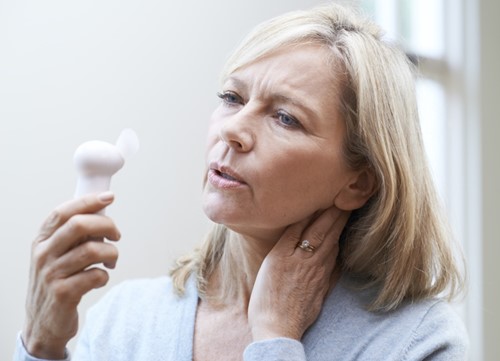
As your ovaries stop releasing hormones, your oestrogen and progesterone levels drop, in turn causing you all sorts of emotional and physical turbulence. If we put it into perspective, because there are oestrogen and progesterone receptors in nearly every organ and tissue in your body, it’s only natural that many parts of your body will be affected. While the changes are completely normal, the effects of the menopause are no less impactful.
Loss of oestrogen affects the brain, and can cause memory fog, anxiety, sleeplessness, social phobia, a loss in motivation and emotional upheaval as well as physical affects like lethargy, hot flushes, vaginal dryness and a resulting reduced sex drive. So, it’s safe to expect you may feel a little out of sorts while going through the motions.
OK, so it’s not all fun and games but it’s completely natural to experience some of the following:
Emotionally
Physically
Remember, if you’re finding your symptoms hard to manage, do contact your doctor straight away, even if it just puts your mind at ease.
As your period pattern changes, you might also notice a change to the amount of blood loss when menstruating and have either a heavier or lighter flow. Many women report experiencing an extremely heavy flow while going through the menopause so it’s good to familiarise yourself with products available to you.
So, even though you might already have a preferred Lil-Lets product, now is a good time to review your choice of sanitary protection. You may want to take a look at our super plus tampons or our Maxi Night Pad as they have the highest absorbency within our range, which could be a lifesaver!
The menopause is signified by not menstruating for 12 months, this usually occurs in your mid- fifties.
Although there’s no magic formula for hot flushes, we do know that stress can be a trigger. It may also be an idea to cut down on your consumption of caffeine and alcohol, since they can make hot flushes worse.
Yes! Once your hormones settle, many women report feeling more energetic and focused. If fatigue is an issue, regular movement, good nutrition, and quality sleep can make a huge difference.
Yes, often with families now living independently, it's your time—whether it’s exploring new hobbies, traveling, reconnecting with old passions, or prioritizing self-care. Think of it as a new chapter filled with possibility.
Whilst osteoporosis can be an issue post-menopause, with strength training, yoga, you can keep muscles and bones strong. And many women actually feel fitter and healthier post-menopause because they focus on overall well-being rather than just menstrual cycles.
For some women, intimacy improves because there’s no concern about pregnancy or period-related discomfort. If dryness is an issue, there are plenty of solutions—like lubricants or vaginal oestrogen—so pleasure can still be a fulfilling part of life.
The mood swings of the perimenopause phase, often diminishes post-menopause as hormone levels regulate. However, if you continue to experience mood swings, lifestyle changes, therapy, or supplements (like magnesium and omega-3s) can help.
The memory lapses, trouble focusing and general mental fatigue experienced during perimenopause should start to disappear after a year or two (earlier for some women) as once fluctuating oestrogen levels have stabilised. Lifestyle changes can speed up the process and improve mental sharpness.