Why pantyliners are the easiest way to protect yourself (and your underwear) against discharge, light periods and withdrawal bleeding.
They’re great for light flow days
If you’ve ever been caught with a sudden heavy flow while wearing just a pantyliner, and you didn’t immediately break into a cold sweat of panic, you are a brave and fearless woman, and we’d like to shake your hand.
If you’re not sure why facing a heavy period flow with just a pantyliner as your only line of defence is a very brave (and very bad) idea, you, like many other people, are probably confused by the distinction between menstrual pads and pantyliners.
We get it. It is confusing.
Pantyliners are literally smaller, thinner pads, but their absorbency and purpose is quite different to the type of menstrual pad you want to be wearing on the second day of your period. Menstrual pads (which are larger, mostly have wings, and higher absorbency) are specially designed for heavy flow days when you’re menstruating.
Pantyliners, on the other hand, cover you (and your panties) on those light flow days at the start and end of your period, when you’re spotting or have withdrawal bleeding, and for any other kind of fluids you may experience throughout the month – that includes cervical fluid or discharge, post-sex discharge, spotting before your period, and even urine from light incontinence.
Spotting before your period? Sorted.
Discharge, breakthrough bleeding, spotting, and implantation bleeding
Is it just us, or was discharge a majorly overlooked topic in our pre-teen period talk and life orientation? This is probably why pantyliners have been such a mystery for so many of us.
Since it’s rarely spoken about, it’s pretty likely that at some stage of your life, you’ve been concerned about the consistency, colour and frequency of your vaginal discharge (or the fact that it’s ruined countless pairs of your favourite underwear!).
We’re here to tell you it’s a completely normal part of having a vagina, and it can actually give us important insights into our menstrual cycles.
From clear and sticky to white or brown: when a pantyliner is a lifesaver
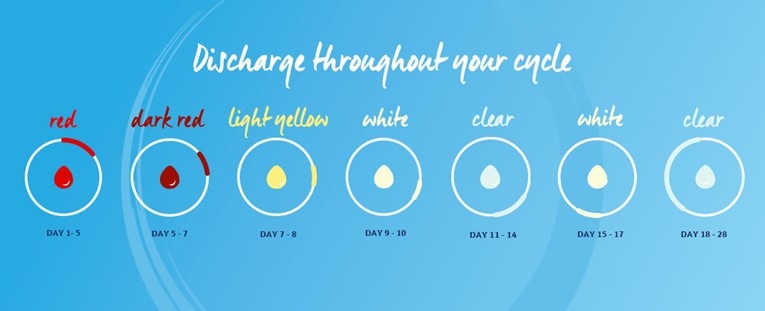
You’ll most likely experience white discharge leading up to the days when you ovulate. Why? As if our vaginas weren’t magical enough, they also tell us (through our discharge) when we’re fertile, which is super helpful if you want to conceive.
Ovulation may cause slight pain and discomfort (sharper pains are known as Mittelschmerz), breakthrough bleeding or a clear, stretchy discharge. It’s your own built-in fertility tracker.
After ovulation, discharge changes again, sometimes turning brown just before your period arrives. This is a mixture of oxidised blood and cervical fluid, and nothing to worry about if it’s a common occurrence for you. Remember: healthy discharge is mild-smelling and can range from a clear to white, to brown, or even light yellow in colour.
Mid-cycle bleeding (or spotting) is any light bleeding that occurs outside of your normal period. This can occur for a number of reasons, many of which are not cause for concern, while others can be a sign of a problem. The most common causes are contraceptives such as hormonal birth control, implants and injections. Stress and medication can also cause this kind of breakthrough bleeding, and light spotting before your period.
Implantation bleeding, covered.
If you’re trying to fall pregnant, you’ll be interested to know that light pink discharge or spotting a couple days after you ovulate may, in some cases, indicate implantation bleeding. From this moment onwards, pantyliners are a huge help, as the increase in oestrogen that’s necessary to maintain your pregnancy may cause a lot more discharge, and more frequently, too.
What to do if you experience heavy spotting or breakthrough bleeding
If you experience heavy spotting or breakthrough bleeding that concerns you and is out of the ordinary and accompanied by any other symptoms or pain, it’s best to chat to your doctor.
Frothy, grey or green discharge can indicate infections like Bacterial Vaginosis (or BV) or an STI, while a cottage-cheese texture could be caused by a yeast infection. Pungent-smelling discharge may be a sign of a hormonal imbalance or inflammation.
Either way, it’s never a bad idea to get this checked out, so if you’re at all concerned, make an appointment with your doctor or gynae.
Pantyliners are a great bridge between your period and the other days in your menstrual cycle, acting as a catch-all for breakthrough bleeding caused by hormones or an oral contraceptive, as well as other fluids. Depending on what’s more comfortable for you, try our Everyday Freshness thick or thin pantyliners to protect your underwear from pesky discharge stains and to avoid feeling damp and uncomfortable.
Change your pantyliners every 3-5 hours, or more often when moist or soiled. Always try to keep your vaginal area dry to prevent any irritation.
Hey, it’s everybody’s favourite unexpected visitor! Not really. Some people have periods that arrive like clockwork but if yours likes to fluctuate, and you experience spotting before your period, wearing a pantyliner on those unsure days is a reassuring protection against surprise spills. Put a pantyliner into your underwear around the time you’re expecting your period, and it’ll absorb unexpected flow, giving you enough time to get a pad or tampon, if you need it.
It’s a good idea to become aware of what your usual cycle is (because we’re all individuals), and to know what usually throws yours off, whether it’s travel, certain medications or stress. If you feel concerned about any sudden changes in your menstrual cycle or uncomfortable or even painful sensations accompanying your period, it’s best to seek medical advice.
It may be nothing, but since inconsistent periods and discomfort can indicate conditions like endometriosis or PCOS (polycystic ovarian syndrome), it’s wise to get it checked out, just in case. (But don’t worry, these are treatable conditions with the right diagnosis and treatment plan.)
On the heavy flow days of your period, tampon and menstrual cup users often like the reassurance that comes with wearing a pantyliner as an extra line of defence from leaks. Some women also simply prefer to use pantyliners at the start or end of a period, as they aren’t as bulky as pads, but still offer enough absorbency for the lighter flow. We recommend our everyday freshness thick pantyliners for this purpose.
Coping with light urinary incontinence
Worried that you pee a little when you get a case of the giggles or when you sneeze? Don’t worry – it’s normal – and it’s not something that only happens to older or pregnant women.
However uncomfortable, it’s common to leak sometimes when you laugh, sneeze or exercise. While people who have been pregnant or given birth (either vaginally or through a Caesarean section) are more likely to have weakened pelvic floor muscles that lead to light urinary incontinence, it can also happen in a different life stages for a number of reasons. If you experience light incontinence, try a pantyliner from our Extra Protection range when you exercise or during the day for that confidence-boosting protection, just in case.
BTW, chat to your doctor if this has started suddenly, is very heavy, is causing you intense discomfort or disrupting your life in any way.
Everyone talks about managing periods, but we don’t talk enough about managing everything else the rest of the month. Pantyliners accommodate you at every stage of your menstrual cycle, not just on the days you’re on your period. With the right pantyliner, you can feel comfortable and confident, all month long.
We’re all different and the Lil-Lets range of pantyliners is designed to help you choose what works for you, based on the absorbency you need, and the shape you prefer. Check out the full range below:

Pantyliners are smaller, thinner versions of sanitary pads, but they’re designed for very light everyday protection rather than period‑heavy flow. Unlike menstrual pads, which are larger, often have wings, and are made for heavier bleeding, pantyliners are perfect for the moments in between. You can use them on light‑flow days at the start or end of your period, for spotting, cervical fluid or discharge, post-sex discharge, or even for very light bladder leaks. They help keep your underwear fresh, dry and protected throughout the month, whatever your body is doing.
Lil‑Lets offers a variety of pantyliners designed for daily freshness, light protection, and comfortable wear, with options for sensitive skin, fragrance‑free, and lightly fragranced preferences. They’re ideal for discharge, spotting, the start or end of your period, or when you want a little extra confidence throughout the day.
Our range includes:
All Lil‑Lets pantyliners are designed to keep you feeling fresh, dry, and confident throughout the day.
Yes, you can. Our pantyliners are designed to be a comfortable bridge between your period days and the rest of your menstrual cycle, giving you light protection whenever you need it. They’re ideal for catching breakthrough bleeding, hormonal spotting or the natural fluids your body produces throughout the month. Depending on what feels best for you, you can choose our Everyday Freshness pantyliners in either thick or thin styles to help protect your underwear from discharge and prevent that damp, uncomfortable feeling.
How often you change your pantyliner is completely personal, every body is different, and every day is different. Some people feel perfectly comfortable using just one pantyliner for the whole day, while others prefer to change more regularly.
As a general guide, many choose to switch to a fresh pantyliner every 3–4 hours, or whenever it starts to feel moist or soiled, to stay feeling dry, fresh and comfortable.
Your discharge can change in colour, texture and amount throughout the month, and that’s completely normal. These changes are all linked to your hormone levels, which rise and fall as you move through your cycle. Around the middle of your cycle, you may notice your discharge becomes clear, stretchy or runny, this is your body preparing for ovulation. A week or two before your period, it often becomes thicker, creamier or white, and sometimes there’s a little more of it than usual.
All of this is just your body doing what it’s meant to do. Wearing a pantyliner each day can help keep both you and your underwear feeling clean and fresh, no matter what stage of your cycle you’re in.
If you ever notice sudden changes that don’t feel normal for you, like strong odour, itching, or unusual colours such as green, it’s always a good idea to chat with a healthcare professional.
Yes! It’s absolutely OK to wear a pantyliner every day. Pantyliners are designed to absorb natural discharge and sweat, helping you feel fresh and comfortable throughout your cycle. Just make sure you change your liner whenever it starts to feel moist so your skin stays dry and happy.
Pantyliners are your go‑to for all the light, everyday moments your body naturally experiences. They protect you — and your underwear — on those light‑flow days at the start or end of your period, when you’re spotting, or when you’re dealing with any of the natural fluids your body produces throughout the month. That includes things like cervical fluid or discharge, light moisture you might notice after intercourse post‑period spotting, and even tiny leaks from light bladder weakness. They’re discreet, flexible, and designed to keep you feeling fresh, dry and confident no matter what your day looks like.
Long pantyliners are perfect for those moments when you want a little extra coverage and reassurance. Their extra length makes them ideal for light spotting, for days when you know you’ll be wearing a liner for longer than 3–5 hours, or for times when you’re using them as backup protection alongside tampons. They sit slightly longer in your underwear, giving you that added confidence when you’re on the move, travelling, or simply want more protection without switching to a pad. If regular liners are your everyday go‑to, long liners are the step up you reach for when you need just that bit more comfort and coverage, without losing the flexibility and discreet feel you love.
There’s no strict rule, because every body is different, but most people like to change their pantyliner every few hours, or simply whenever it starts to feel moist. Pantyliners are designed for light, everyday freshness, so swapping to a new one throughout the day helps you stay comfortable, dry and confident. Just listen to your body and change yours as often as you need to.
Discover long-lasting pantyliners suited to your lifestyle by taking the quiz.
The difference between pads and pantyliners is that pads are specifically designed to absorb menstrual fluid and are made up of thick, absorbent materials. Pantyliners are thinner and smaller, making them perfect to use between periods for daily discharge, or when your menstrual flow is light.
Yes, we offer fragrance‑free pantyliners because we believe choice matters. Your skin, your comfort, your flow… they’re all unique, so we design options that work beautifully for sensitive skin and everyday freshness. That includes our SmartFit Everyday Freshness Thin Unscented Pantyliners, SmartFit Extra Protection Unscented Pantyliners, and several other unscented styles across our range. These products are created to keep you feeling dry, protected and confident without added perfumes or dyes
Thick pantyliners are all about extra confidence and extra absorbency. They’re perfect for days when your body is producing a little more moisture than usual, whether that’s heavier discharge, very light period flow, or when you want backup protection alongside a tampon or menstrual cup. Their slightly thicker design means they can handle more without feeling bulky, keeping you feeling dry, secure and supported throughout the day.
If you love that little boost of protection but still want something soft, breathable and comfortable, Lil-Lets thicker pantyliners are designed to move with your body while giving you the reassurance you need, exactly when you need it.
Yes we do. We offer lightly scented pantyliners designed to give you an extra touch of freshness while still being gentle on your skin. In our range, you’ll find options like our Everyday Freshness Thin Scented Pantyliners and Everyday Freshness Thick Scented Pantyliners, giving you the freedom to choose the level of protection and fragrance that feels right for you. [lil-lets.com]
So whether you prefer unscented for sensitive skin or a light fragrance for all‑day freshness, we make sure you always have a choice that supports your comfort and confidence.
Absolutely. Our pantyliners are designed for real life, which means you can wear them wherever your day takes you. Heading to the gym? They help manage sweat and movement so you stay feeling fresh. Sitting at your desk at work for hours? They keep your underwear protected from natural discharge so you can focus on what matters. Running around with the kids or family? They’re there for that too — soft, breathable and flexible enough to move with you.
Whether you’re on the go, working hard, or just getting through your everyday routine, our pantyliners give you the comfort and protection you need to feel confident all day long.
Pantyliners and pads are designed for totally different moments in your month, and that’s what makes each one so useful. Lil‑Lets pantyliners have a slim, lightweight profile, perfect for everyday wear. They’re designed for light protection: things like natural discharge, spotting, light moisture or giving you a little extra confidence when you’re on the move. They’re discreet, flexible, and ideal for days when you want freshness without the bulk.
Pads, on the other hand, are created for your menstrual flow. They’re thicker, more absorbent, and provide the level of protection you need during your period, especially on medium or heavy flow days. Think of pantyliners as your go‑to for daily comfort, and pads as the product you reach for when your period arrives and you need more absorbency and support.
Both have their place, it’s all about choosing what your body needs that day.
A pantyliner is a thinner, smaller pad used to absorb vaginal discharge, light menstrual flow, light bladder leaks, or spotting. It is worn inside the underwear to prevent stains and can act as a backup when wearing a tampon.